Common Microgreen Diseases and How to Prevent Them: A Grower's Guide
Healthy microgreens begin with healthy growing practices. From damping-off and mold to root rot and mildew, understanding the most common microgreen diseases can help growers maintain quality and achieve better harvests. Learn how proper airflow, watering, and hygiene can keep your microgreens thriving.
Growing microgreens may seem simple, but producing healthy, vibrant greens requires close attention to their growing environment. Since microgreens are cultivated in warm and humid conditions, they can sometimes become susceptible to fungal and bacterial diseases. At Praroha greens, maintaining hygiene, proper ventilation, and controlled growing conditions is a key part of our commitment to delivering some of the best microgreens in Hyderabad. The Most Common Diseases in Microgreens
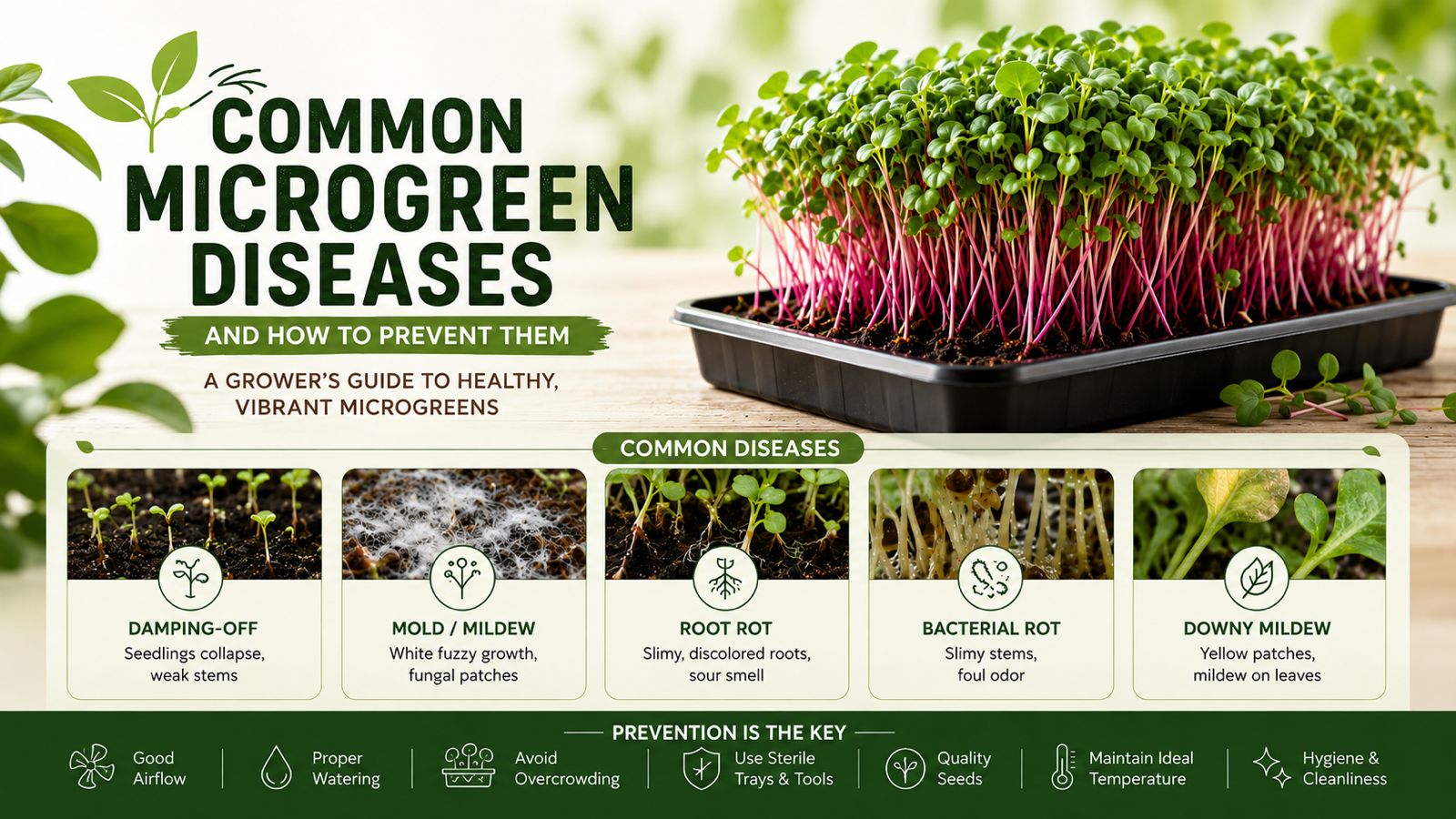
- Damping-Off Damping-off is one of the most common problems in microgreen cultivation. It is caused by soil-borne fungi that attack young seedlings during germination. Typical Symptoms ● Weak and thin stems ● Seedlings suddenly collapsing ● Poor or uneven germination ● Water-soaked stem bases How to Prevent It ● Use sterile growing media and sanitized trays. ● Avoid overwatering. ● Maintain proper airflow around trays. ● Use high-quality, disease-free seeds.
- Mold and Mildew Mold develops when excessive humidity combines with poor air circulation. It often appears as white fuzzy growth on seedlings, roots, or growing media. Typical Symptoms ● White cotton-like growth ● Fungal patches on stems or roots ● Yellowing leaves ● Unpleasant odor in severe cases How to Prevent It ● Improve airflow with fans. ● Reduce humidity levels. ● Avoid dense seed sowing. ● Remove infected trays immediately.
- Root Rot Root rot occurs when growing media remains excessively wet for prolonged periods. Typical Symptoms ● Brown or black roots ● Slimy root systems ● Wilting seedlings ● Sour or unpleasant smell How to Prevent It ● Ensure proper drainage. ● Prefer bottom watering after germination. ● Avoid waterlogging. ● Maintain moderate moisture levels.
- Bacterial Rot Bacterial contamination can spread through poor hygiene, contaminated seeds, or unclean water. Typical Symptoms ● Sticky or slimy stems ● Foul odor ● Soft tissue decay ● Poor plant growth How to Prevent It ● Use clean potable water. ● Sanitize trays and equipment. ● Source quality seeds from trusted suppliers. ● Maintain overall growing hygiene.
- Downy Mildew Downy mildew generally develops when moisture remains on leaves for long periods. Typical Symptoms ● Yellow patches on leaves ● White or grey fungal growth ● Weak and unhealthy seedlings How to Prevent It ● Water from the bottom whenever possible. ● Maintain proper spacing between seedlings. ● Improve ventilation and airflow.
Best Practices for Healthy Microgreens Disease prevention begins with creating the right growing environment. At Praroha greens, we follow a few essential practices that help ensure healthy and consistent harvests: ✔ Use food-grade sanitized trays and tools. ✔ Maintain humidity levels between 40–60%. ✔ Provide strong airflow with fans. ✔ Avoid overcrowding seeds. ✔ Use clean potable water. ✔ Prefer bottom watering after germination. ✔ Remove infected trays immediately. ✔ Use high-quality, disease-free seeds. ✔ Maintain temperatures between 18°C–24°C. ✔ Use food-grade hydrogen peroxide occasionally for fungal management when required.
Why Disease Prevention Matters Healthy microgreens are not just about achieving a better yield—they're about delivering safe, nutritious, and high-quality greens. Most microgreen diseases can be prevented through simple practices such as proper watering, good airflow, and maintaining cleanliness throughout the growing process. At Praroha greens, every tray is grown with care and monitored closely to ensure freshness, quality, and consistency. That's why customers looking for fresh microgreens in Hyderabad trust us for premium, responsibly grown microgreens. Final Thoughts The secret to healthy microgreens isn't complicated. By controlling moisture, improving airflow, and maintaining strict hygiene, growers can significantly reduce disease risks and enjoy vibrant, nutrient-rich harvests. Whether you're growing microgreens at home or simply enjoying them on your plate, healthy greens always start with healthy growing practices—and that's the philosophy we follow at Praroha greens.